Newsletter #20 – Performance Check – Time for Change?

The Sept 2023 Infometrix eNews was recently published. Included in this newsletter:

-Introduction
-Change of Seasons – Move, Software Update and Ai-Metrix
-Upcoming Events
-Tech Tip: Chromatographic Alignment
-After Further Review…Practical AI for Manufacturing

We are Moving

Visit us at our new location starting Sept. 1, 2023 View this email in your browser

We are moving to a New Location

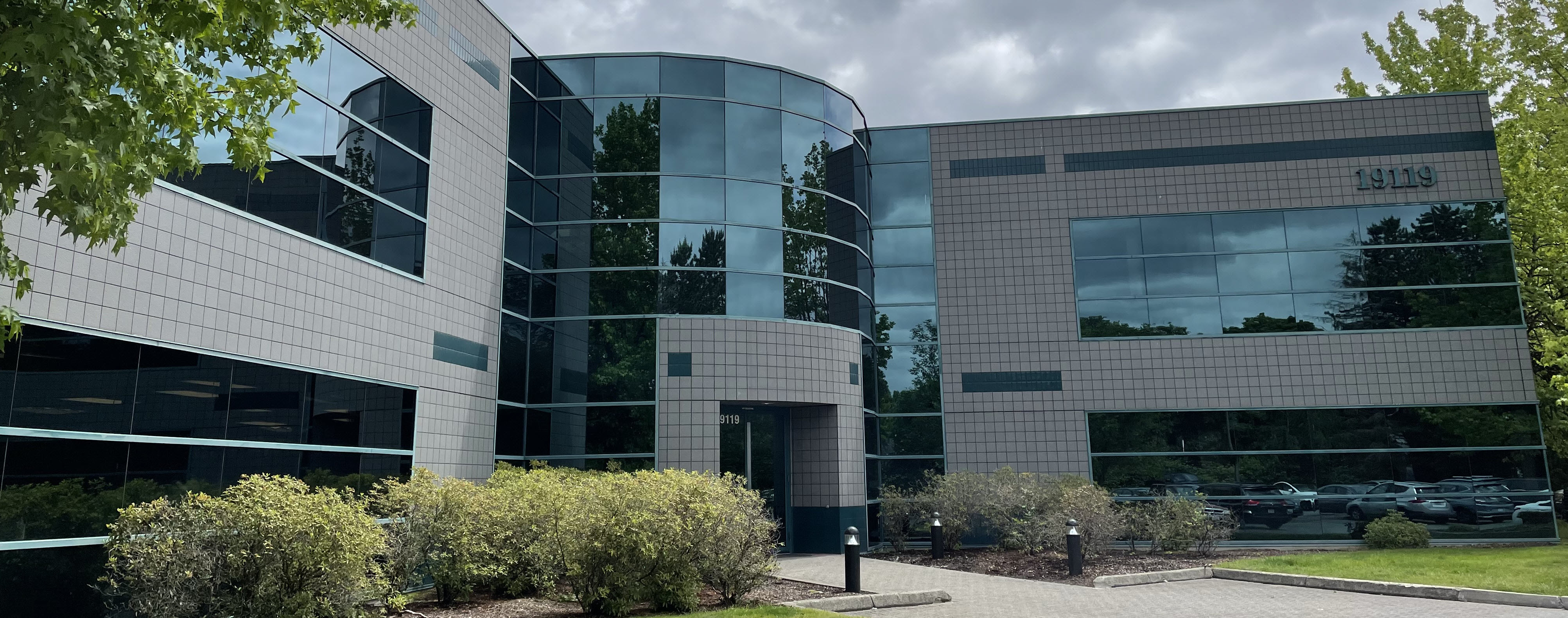
This letter is to inform you that we are moving to a new location on 1st of August 2023. To better accommodate our current and changing needs, we are relocating. Please update our new address in your system and send all orders, deliveries, and correspondence to this location after the 31st of July. Infometrix, Inc. 19119 North Creek Pkwy, Suite 100 Bothell, WA 98011 Our phone number and email address will remain the same. Voicemail: 425-402-1450 Email: info@infometrix.com Website: www.infometrix.com We would also like to take this opportunity to thank you for working with us over the years. Infometrix, Inc. is looking forward to working with you the same way at our new address! Thank you once again and if you have any questions, please don’t hesitate to contact us. Infometrix, Inc.
www.infometrix.com Subscribe to our newsletter. Follow Infometrix on LinkedIn.
Virus-free.www.avg.com

IFPAC 2023 – The Multiverse of Challenges for Spectral Libraries

IFPAC 2023 Conference Short Course and Paper

Venue: Time to be announced Bethesda North Marriott Hotel and Conference Center Presented by: Brian Rohrback, Ph.D., MBA, President, Infometrix, Inc. Abstract: There are challenges when considering application-specific libraries of optical spectra. For most quality control applications in industry, there is no standard set of spectra available as the process is typically tied to a set of (unique) analytes mixed in various proportions. Add in changes from ingredient suppliers, seasonal variations, and changes in unit operation, there is not a pinpoint target for assessing quality. Luckily, we have more than a half century of processing data like this using chemometrics and the newer moniker machine learning. But handling process libraries is not just a simple application of an appropriate algorithm; there are challenges that need to be considered in all aspects of sample collection, handling instrument drift, and ensuring consistency across all operators. An outline of best practices needs to include how to match laboratory reference data to spectral data, an unbiased mechanism for selecting validation samples, an optimal mechanism for model construction, establishing standards for quality reports, tracking model performance over time, handling process or ingredient transitions, and much more. A systematic approach to building, maintaining, and benefiting from an application-specific spectral library is presented as part of the USP effort to establish appropriate standard practices. Register at www.IFPACglobal.org/attendee-registration.

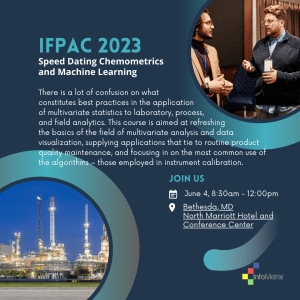
IFPAC 2023 – Speed Dating Chemometrics and Machine Learning

IFPAC 2023 ConferenceVenue: June 4, 2023, 8:30am – 12:00pm Bethesda North Marriott Hotel and Conference Center Presented by: Brian Rohrback, Ph.D., MBA, President, Infometrix, Inc. Barry M. Wise, Ph.D., President, Eigenvector Research, Inc.     Course Description: There is a lot of confusion on what constitutes best practices in the application of multivariate statistics to laboratory, process, and field analytics. The terminology in use does not always clarify and most of the time a technique touted in the literature is not compared to any other technology that could be applied to the same problem. Tools from chemometrics and machine learning categories benefit from some user experience and this course is aimed at refreshing the basics of the field of multivariate analysis and data visualization, supplying applications that tie to routine product quality maintenance, and focusing in on the most common use of the algorithms – those employed in instrument calibration. An introduction to data visualization and exploratory data analysis techniques such as principal component analysis (PCA) and hierarchical cluster analysis (HCA) will be covered along with the practical basis for their use. A wide variety of examples will be shown ranging from laboratory analysis, in-line and on-line process monitoring, and field applications. Infometrix President Brian Rohrback will cover the thought process that helps organize and complete the implementation of a bespoke evaluation system. Calibration models are a critical part of spectroscopic and other methods in Process Analytical Technology (PAT) and in the laboratory. But there’s more to getting a good calibration model than simply measuring a few samples and doing a Partial Least Squares (PLS) regression. The process starts with planning for calibration samples and ends with deployment and maintenance considerations. Eigenvector Research President Barry M. Wise covers the steps required to produce a quality calibration model, including data screening, visualization, and model creation. Also covered will be common mistakes and how not to make them. These topics are designed to cover the best practices of chemometrics technology and will prepare participants for tackling a vast array of problems. This course is useful for any scientist concerned with optimizing their analytical methods to get the most out of either laboratory or process operations. To Register: This course will be presented prior to the IFPAC Annual Meeting. Register at www.IFPACglobal.org/attendee-registration.